
The Mechanics of Sciatica and Lower Back Pain
A sharp, shooting pain radiating from the lower back down the leg. A dull, constant ache in the glutes. The inability to sit comfortably or stand up without bracing yourself. If you are experiencing these symptoms, you are likely dealing with sciatica.
Sciatica is not a diagnosis in itself; it is a symptom of an underlying mechanical issue. The sciatic nerve—the longest and thickest nerve in the human body—originates in the lower lumbar spine and travels deep through the glutes, down the back of the thigh, branching out to the foot.
When this nerve is compressed or irritated, it fires warning signals (pain, tingling, or numbness) along its entire pathway. The crucial clinical question is: Where is the compression occurring?
Disc Herniation vs. Piriformis Syndrome
True sciatica originates at the lumbar spine, often due to a bulging or herniated disc pressing directly against the nerve root. This requires medical diagnosis and, sometimes, intervention.
However, a significant percentage of my clients present with "pseudo-sciatica," more accurately termed Piriformis Syndrome. The piriformis is a small, deep muscle in the buttocks that assists in rotating the hip. In many individuals, the sciatic nerve passes directly beneath (and sometimes straight through) the piriformis muscle.
When you sit for extended periods, the gluteal muscles weaken (gluteal amnesia) while the hip flexors tighten. The piriformis is forced to overcompensate to stabilize the pelvis. It becomes hypertrophic, tight, and inflamed. It literally clamps down on the sciatic nerve.
Why Painkillers and Foam Rollers Fail
If you are treating Piriformis Syndrome with painkillers, you are turning off the fire alarm while ignoring the fire. If you are using a generic foam roller, you are simply bruising superficial tissue without reaching the deep external rotators causing the impingement.
The Deep Tissue Protocol
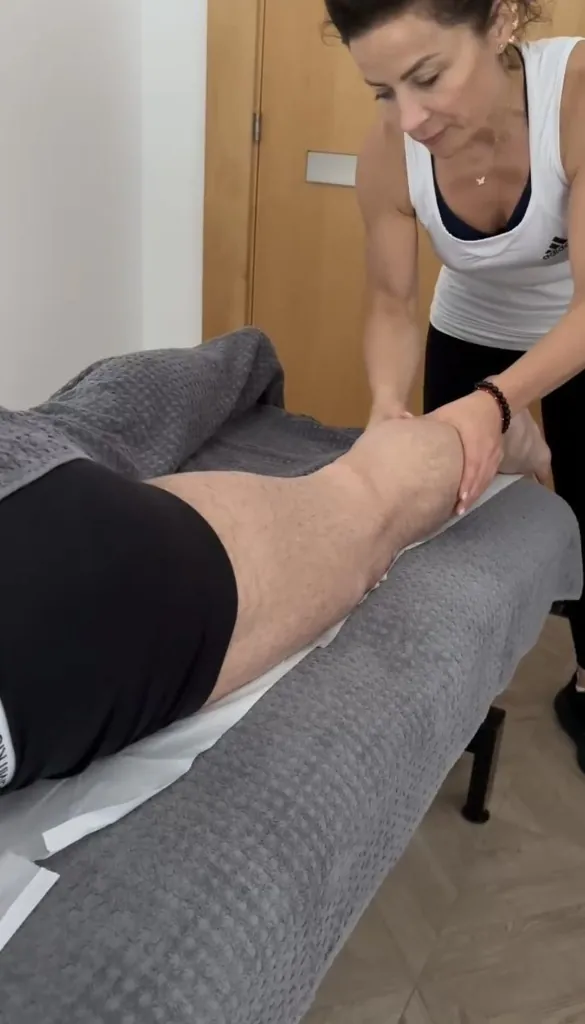
Clinical massage is highly effective for Piriformis Syndrome and muscular lower back pain. My protocol involves precise anatomical navigation to access the deep six lateral rotators of the hip. By applying sustained, targeted pressure to the piriformis, gluteus medius, and the quadratus lumborum (QL), we forcefully deactivate the muscle spindle. The muscle relaxes, the inflammation subsides, and the sciatic nerve is finally decompressed.
Correcting the Pelvic Tilt
Decompressing the nerve provides immediate relief, but addressing the structural cause ensures it does not return. Prolonged sitting causes an anterior pelvic tilt (the front of the pelvis drops, the back rises). This hyperextends the lumbar spine and places relentless strain on the lower back muscles.
To correct this, I employ targeted sports massage techniques to release the shortened hip flexors (psoas and iliacus) while facilitating the engagement of the inhibited gluteal and core muscles. It is about restoring biomechanical equilibrium.
When to See a Therapist vs. a Doctor
If your pain is muscular, postural, or related to piriformis compression, clinical massage offers rapid and measurable outcomes. However, if you experience sudden loss of bowel or bladder control, severe weakness in the leg (foot drop), or bilateral numbness, you must seek immediate medical attention, as these are signs of severe spinal cord compression.
Your Next Session
Do not accept chronic lower back pain or sciatic nerve irritation as a permanent condition. Targeted clinical intervention can resolve the compression, restore your mobility, and eliminate the pain.