
Understanding Adhesive Capsulitis (Frozen Shoulder)
Few conditions are as frustrating and debilitating as frozen shoulder (adhesive capsulitis). It is characterized by severe stiffness, restricted range of motion, and persistent pain in the shoulder joint, which typically develops in three distinct phases: freezing, frozen, and thawing.
During the freezing phase, any movement of the shoulder causes pain, and the shoulder's ability to move slowly decreases. In the frozen phase, the pain may start to diminish, but the shoulder becomes extremely stiff, making daily activities like dressing, reaching, or sleeping on the side nearly impossible. During the thawing phase, range of motion slowly begins to improve.
This condition occurs when the strong connective tissue (shoulder capsule) surrounding the glenohumeral joint becomes thick, stiff, and inflamed, leading to tight bands of tissue called adhesions. Standard treatments often involve anti-inflammatories or steroid injections, but they fail to address the underlying fascial restrictions and muscle guarding.
Why Passive Rest Prolongs the Condition
While acute inflammation requires rest, long-term immobilization is the worst response to frozen shoulder. The body operates on a "use it or lose it" principle. If a joint is kept still, the capsule continues to tighten, and the surrounding stabilizer muscles (the rotator cuff, subscapularis, and teres major) atrophy and contract defensively.
Forcing the shoulder through pain is counterproductive, but controlled, targeted mobilization is crucial. Passive rest alone will not break down thick collagenous adhesions once they have established within the joint capsule.
The Clinical Mobilization Protocol
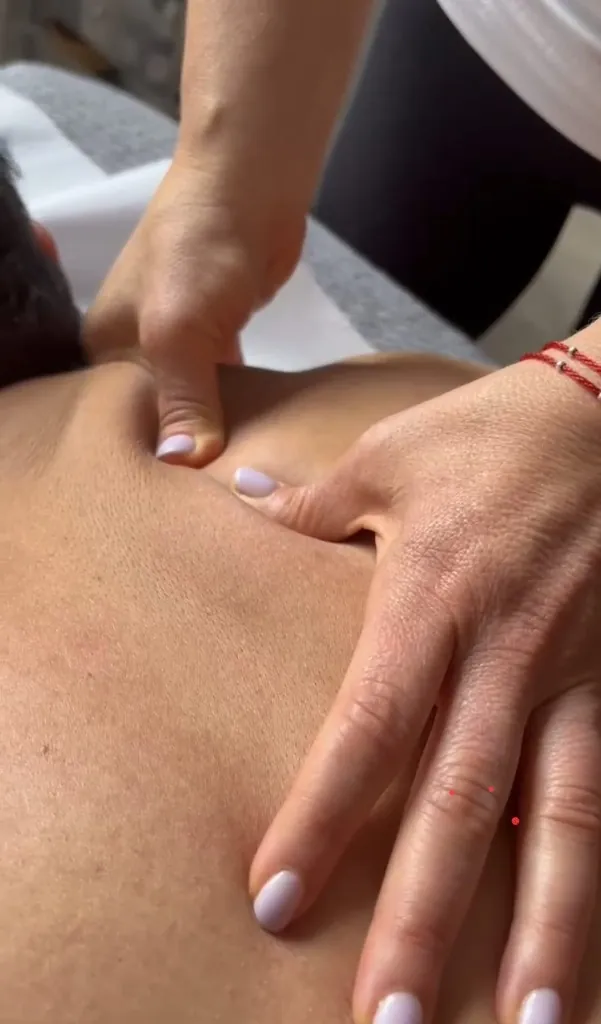
My frozen shoulder recovery protocol combines targeted myofascial release, trigger point therapy, and gentle passive mobilization. We focus heavily on the subscapularis—a deep rotator cuff muscle located on the underside of the shoulder blade that is almost always severely locked in frozen shoulder cases. By releasing the subscapularis, pectoralis minor, and latissimus dorsi, we can rapidly reduce pain levels and start restoring range of motion.
The Role of Trigger Point Therapy
To protect the inflamed joint capsule, the brain activates protective muscle guarding. This results in hyperactive trigger points in the supraspinatus, infraspinatus, and deltoids. These trigger points mimic and amplify the joint pain. By systematically identifying and deactivating these trigger points, we break the pain-spasm-pain cycle, allowing the joint to undergo mobilization work with far less resistance.
Your Recovery Journey
Frozen shoulder recovery is a process that requires consistency, patience, and precise clinical guidance. A combined approach of targeted clinical session work and daily prescribed mobility drills is the most effective path to reclaiming a pain-free, fully functional shoulder.